Corn crops affected by Texas drought, 2013 | Smith Collection/Gado/Getty Images
Letter to the Editor in the East Hampton Star East Hampton December 2, 2019
Dear David,
At check-out in Brent’s Store in Amagansett, a wizened fisherman blamed state regulators for the fact that the tags he’s allocated now allow him to catch barely enough fish for his own family table. And as a New York Times headline announced, “The Scallops Are All Dead.”
While we look for local influences, we ignore at our peril the fact that it is a global problem.
This week, to pick one from a thousand stories, The Washington Post profiled Tombwa, Angola, where in the 1990s there were 20 fish factories processing tons of fish coming from the sea. Now there is one factory left. The fish species recently thriving there have collapsed in the overheated water. Trawlers ranging from distant ports are gobbling up what remains.
Ten years ago Bill McKibben wrote, “Climate Change is about whether you eat or don’t eat.” Deniers called it alarmism.
This year, as temperatures in Bordeaux reached 106 degrees, the vineyards were parched and wine production was down 13 percent. Corn production suffered the same fate.
In the American Midwest unprecedented rain bombs flooded the fields and destroyed billions of dollars’ worth of crops. Last year (or was it the year before?) multi-year drought destroyed countless acres of nut orchards that had been prosperous for generations in California. A recent Intergovernmental Panel on Climate report predicts a 2 to 6 percent decline in worldwide crop yields per decade going forward, at the same time as population swells.
Sidewalk experts, including the entire Republican Party, still scoff at the science. “These scientists can’t make up their minds. One day it’s drought, the next day it’s flood! Which is it, they don’t know what they’re talking about. They can’t predict the weather next week, and they claim to predict it 20 years from now. Gimme a break!”
More people now understand that we should have listened to James Hansen when he was informing the American Congress 30 years ago about climate disruption. Imagine how far we could have come in 30 years toward slowing the onset. Still we dither instead of taking personal responsibility for the problem.
Drive down any street lined with parked cars and note that most of them are SUVs. Their growth in popularity has canceled out the benefits we might have gained in the incipient move to electric vehicles. We burn as much gas now as we did before electrification because mammoth SUVs use more gas than the smaller cars we used to drive, not to mention the sky parade of private jets roaring in and out of our airport. So much for self-regulation in the face of global catastrophe.
Demagogues and religious zealots around the world can turn men without hope into terrorists. This is just the beginning. The World Bank projects 143 million climate-displaced migrants by 2050, and stresses that this is a lower bound estimate, with the numbers certain to go much higher, perhaps sooner, assuredly later.
As we approach the 2020 elections, no matter how you have voted in the past, if you care about fish, or food in general for the children you love, remember that we have two parties in this country with radically different attitudes about climate change. Forget about the personal foibles of candidates that the media love to dwell on.
Remember that one party makes its living serving the interests of the fossil fuel industry. The other party is finally listening to scientists and young people who will inherit this planet, and committing to meaningful action. Climate change is no longer about 2100, Bangladesh, or polar bears. It has come to this: not just in the long run, but for millions alive today in America, including the fisherman at Brent’s, nothing else matters.
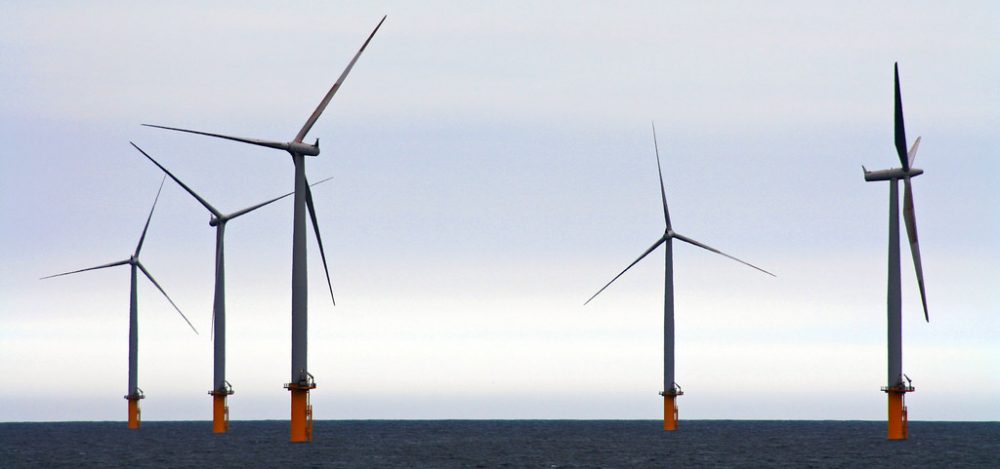
THE EXECUTIVE DIRECTOR of the Rhode Island Coastal Resources Management Council applauded Vineyard Wind and four other companies for agreeing to a common layout
for their New England offshore wind farms, but he said the
configuration the firms are proposing is exactly what his agency pressed
Vineyard Wind to adopt nearly two years ago.
Grover Fugate said the decision by the wind farm developers to go with a standard east-west orientation with each turbine one nautical mile apart settles a lot of concerns about how fishing, navigation, and search and rescue operations can coexist with the developing offshore wind industry. “I think it takes a lot of the issues off the table,” he said.
Getting issues off the table was a big priority for all the
companies, as the industry is temporarily stalled while the Coast Guard
and the federal Bureau of Ocean Energy Management are trying to decide
how Vineyard Wind’s first-in-the-nation proposal will mesh with other
projects coming along in the development pipeline. While some fishing
interests are still grumbling about this week’s turbine layout proposal,
Fugate’s personal endorsement is a strong signal the initiative is
likely to pass muster with both fishermen and federal regulators.
Still, Fugate can’t help but chuckle how Vineyard Wind came around to
the council’s point of view. “The alignment that they’re doing is what
we were trying to get Vineyard Wind to do two years ago,” Fugate said.
At the time, Vineyard Wind had proposed 84 turbines arranged on a
northwest-southeast orientation, with the turbines nearly nine-tenths of
a nautical mile apart. The council, representing fishing interests,
pressed for an east-west orientation with one nautical mile between the
turbines. Vineyard Wind resisted, insisting it was on a tight schedule
to take advantage of a federal tax credit and it had already spent $25
million taking core samples from the ocean floor at each of its proposed
turbine locations.
“They said it would have killed the project if we delayed it,” he said.
In February, the council and its Fishermen’s Advisory Board grumbled about Vineyard Wind’s proposed layout but nevertheless gave their blessing
after the company agreed to make $4.2 million in payments to commercial
fishermen over 30 years and create a $12.5 million trust to cover
additional costs. If the council and its advisory board had voted
against the Vineyard Wind project and ended up being overruled on
appeal, they could have ended up with nothing.
Now the council may get the wind farm layout it wanted plus the
settlement money it negotiated earlier. (“Our lawyers are looking at
it,” Fugate said.)
Fugate said the biggest advantage of the layout proposed by the five wind farm developers is its simplicity, allowing the east-west lanes to be used for fishing and the north-south lanes for navigation. He said the east-west lanes can alternate between fixed-gear fishing (lobster) and mobile-gear fishing (squid). Fugate said the layout would appear to satisfy most fishermen, but he acknowledged some still want additional two-mile navigation lanes cutting through the wind farm areas.
A big questionmark now is whether Vineyard Wind can build its wind farm even if it passes federal muster. Fugate said the company told the Rhode Island Coastal Resources Management Council nearly two years ago that the project would go belly up if it was delayed. In mid-July, the company said the project would be at risk if it wasn’t approved by federal regulators in six weeks. In early August, the Bureau of Ocean Energy Management put the wind farm on hold indefinitely, but Vineyard Wind insisted the “project remains viable and continues to move ahead.” The joint announcement on wind farm layout earlier this week suggests Vineyard Wind continues to believe the project is viable, even though its original timetable has been blown up.
A spokesman for Vineyard Wind declined to comment on the record. In a letter to the Coast Guard released on Tuesday, the five companies — Vineyard Wind, Eversource Energy, Mayflower Wind, Orsted North America, and Equinor Wind — laid out why the standard configuration serves all interests best. “The New England leaseholders are proude to be working together to present a collaborative solution that we believe accommodates all ocean users in the region,” they said.
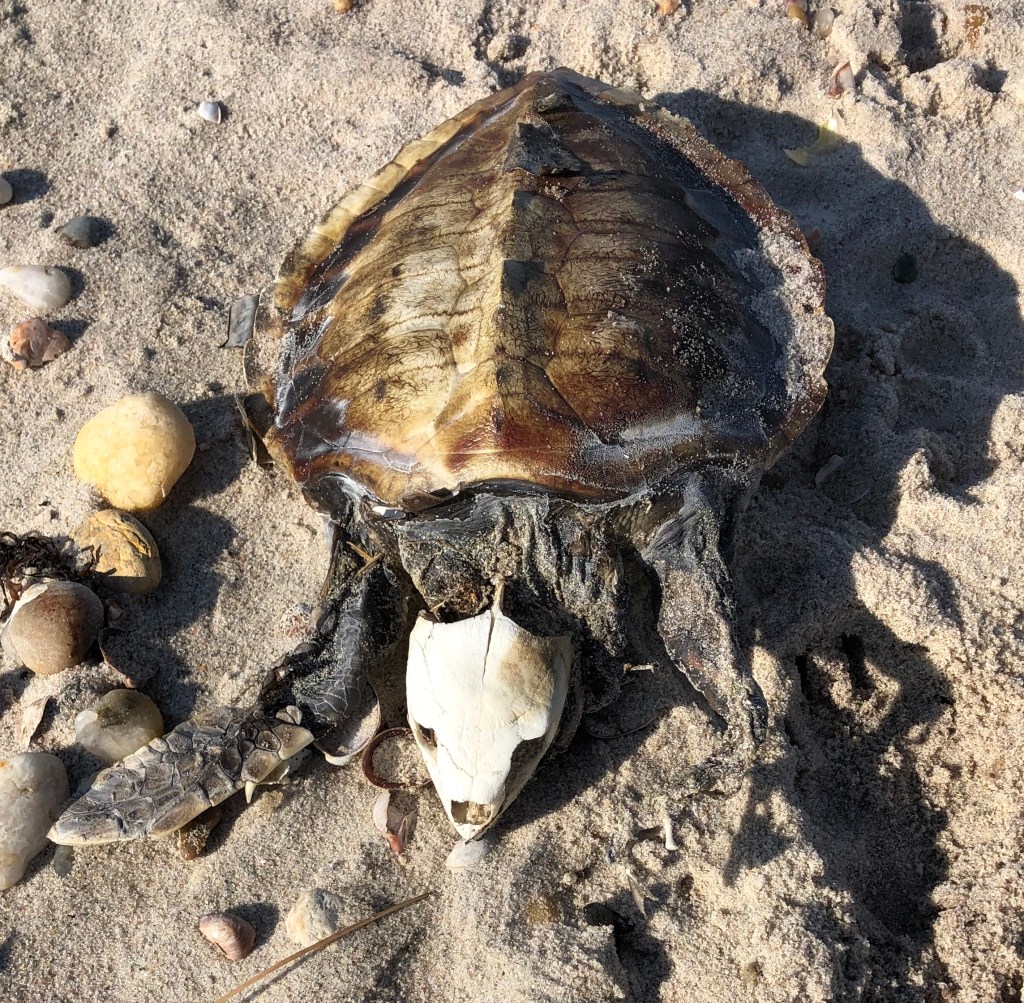
On my daily beach walk I came across this dead animal (about 1 week ago, on the Lion Head beach close to the entrance to Hog Creek, in Springs, East Hampton):
Based on the pictures I took, it’s now been identified as Kemp’s Ridley Turtle. This is a critically endangered species. In fact it is the most endangered sea turtle species!
Obviously we would all like to know why this rare animal showed up on our beach, and what might have caused its death.
Adult turtles which reach sexual maturity at the age of 7-15 years, measure about 27″ in length. This specimen measured about approx. 15″ and was therefore a juvenile.
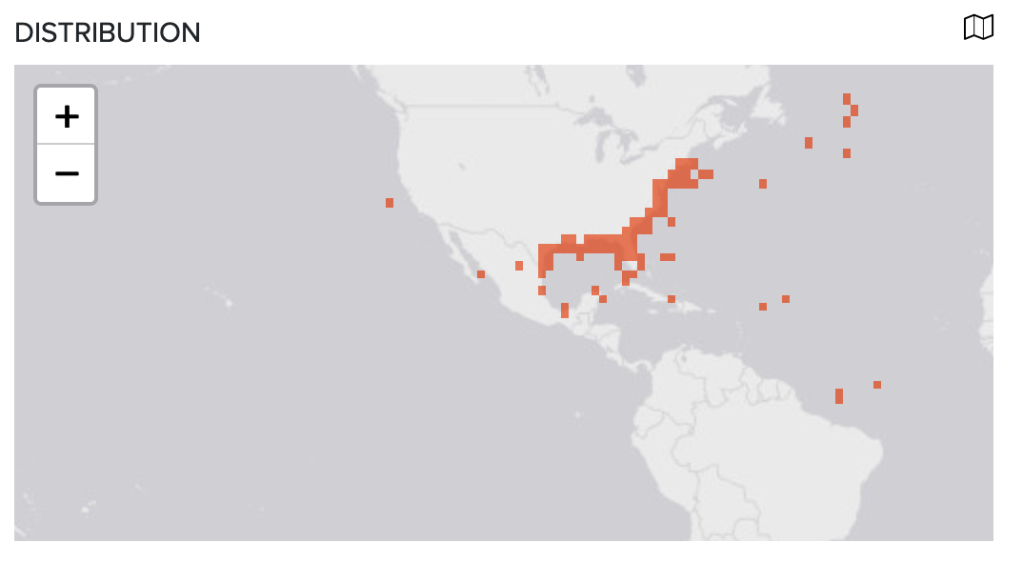
Kemp’s Ridley can be found along the Atlantic coast as far north as New Jersey. Mature adults migrate back to their nesting beach in Mexico every year: female Kemp’s Ridley turtles come together all at once in what is known as an arribada, which means “arrival” in Spanish. Nearly 95 percent of Kemp’s Ridley nesting worldwide occurs in Tamaulipas, Mexico. Nesting is usually between May and July, and females will lay up to three clutches of 100 eggs that must incubate for 50-60 days.
Hatchlings spend up to 10 years in the open ocean as juveniles. Kemp’s Ridley turtles occupy “neritic” zones, which contain muddy or sandy bottoms where their preferred prey is plentiful. Even in the ocean, the Kemp’s Ridley turtles rarely swim in waters deeper than about 160 feet.
Kemp’s Ridley turtles face many threats to their survival including incidental capture in fishing gear, or bycatch, egg collection by predators and climate change.
What was the cause of death for our turtle? Kemp’s Ridley turtles do not tolerate cold water below 8 degrees Celsius. East Hampton waters are currently about 10 degrees Celsius. So it seems that the turtle was too far north for its comfort zone. Note that it’s left front flipper seems to be missing or seriously mangled. This suggests that the turtle may have been injured, perhaps by fishing trawlers. Incidental take by shrimp trawlers in the gulf of Mexico is a recognized hazard for this species.
Finally, there is the possibility that ocean acidification from climate change has altered the food chain for this species as noted by OCEANA. Kemp’s Ridley turtle feeds on mollusks, crustaceans, jellyfish, fish, algae, seaweed, and sea urchins. But juveniles (such as our specimen) feed on crabs[13] and on bay scallops.
It’s interesting that bay scallops in the Peconic bay have recently suffered a die-off discussed elsewhere on this blog and possibly related to ocean acidification.
Bottom line: you don’t have to look far to witness a species in trouble!
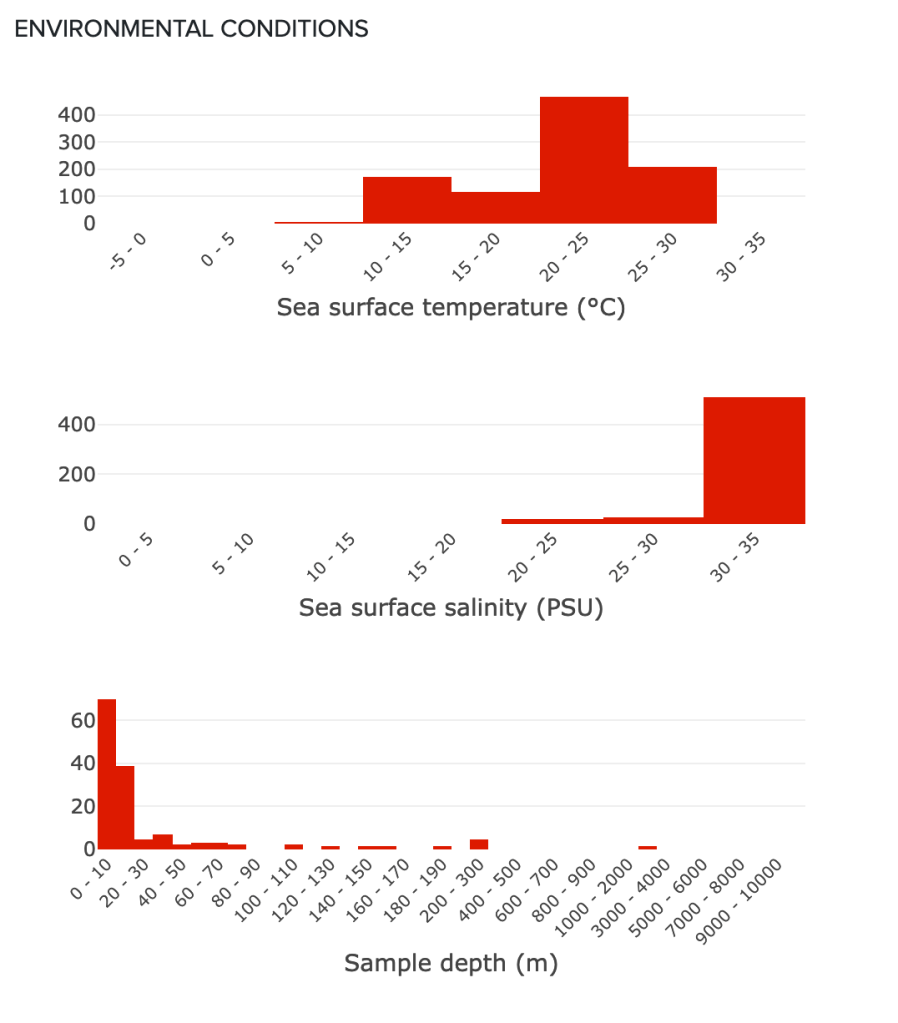
Interesting website where you can find data on any species: f.ex. Kemp’s Ridley turtle
I note that this species likes waters with high salinity (over 30 PSU), see above. The following map shows that our waters around Long Island have much lower average salinity (less than 25 PSU). Thus both the low temperature and the low salinity represent a hostile environment for Kemp’s Ridley Turtles.
WWW is a friend of fish and all the creatures living in our oceans!
Even as the oceans are acidifying and
warming at alarming rates, and species are migrating northwards, the opposition
to off-shore wind energy suggests wind farms will bring harm to fish, or to
whales, etc. Healthy oceans spell abundant fish and are good for the
fishing industry and some fishermen recognize this.
In our opening statement regarding the
South Fork Wind Farm, pinned to the top of this blog it states:
WILL THIS HURT OUR FISHERMEN?
After listening to commercial fishermen, Bureau of Ocean Energy Management made
sure that wind turbines and cable will avoid Cox’s Ledge, a valuable commercial
fishing area. In fact, existing wind turbines off Block Island attract marine
life to them, imitating an artificial reef.
For years, researchers have warned that the increasing acidity of the oceans is likely to create a whole host of problems for the marine environment. Check it out: the evidence is already here.
One of the biggest problems is that zooplankton is shifting poleward as a result of warming ocean temperatures. The findings, published in the journal Nature, show the widespread impact climate change is having on marine ecosystems. Scientists have warned that while some species will be able to follow their food source to new waters, many others will not. Even at 1 degree [Celsius] of warming, species have to adapt because their food source has disappeared. As an example, read about the migration of stingrays that have wiped out oyster beds in the Chesapeake Bay and have moved to the Peconic Bay this year!
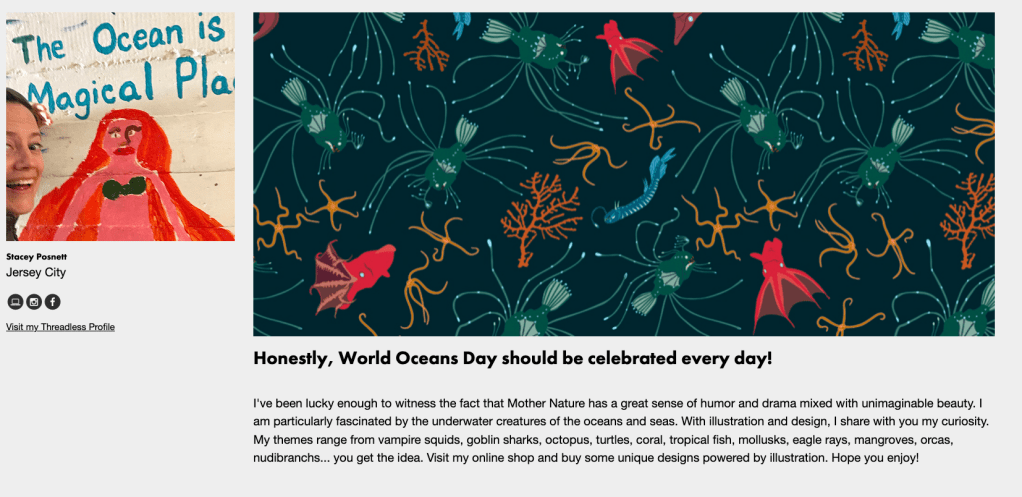
Here is something fun you can do. Go to https://poshtide.threadless.com/collections. Pick your favorite fish (or shell fish) design and order a holiday gift: tee shirt, slippers, back pack, pillow, beach towel, zip pouch, or even a shower curtain! If you are on Instagram check out @staceyposnett an incredibly gifted artist and designer and a big environmentalist. You can also order custom items which include the Win With Wind logo.
Publication: The Southampton Press
By Michael Wright
Nov 5, 2019 10:25 AM
Nov 5, 2019 4:59 PM
Dead Bay Scallop
A massive and mysterious die-off of bay scallops over the
past summer wiped out as much of 95 percent of the valuable and iconic
shellfish in parts of the Peconic Bay system, raising concerns about the
effect that climate change may have on the future of the East End’s
most famous natural resource.
The scale of the losses, the
scientists who have documented the destruction said, is so great in some
areas as to be reminiscent of the devastation wreaked by some of the
infamous “brown tide” algae blooms of the late 1980s and early 1990s,
which decimated the wild stock and all but ended a centuries-old
commercial fishing industry that relied solely on harvests from the East
End’s bays.
The cause of this year’s devastation is not
immediately clear, but scientists say that the arch-enemy of bay
scallops — algae blooms like brown tide and the more recent “rust tide” —
do not appear to be at fault, and other likely culprits also do not
seem to be to blame.
What’s left to blame, according to one of
researchers who has tracked the die-off, is a confluence of
environmental conditions and the stresses of the scallops’ own
biological cycles that may have killed the shellfish, even as they sowed
the seeds of next year’s stock.
There is some good news amid
the devastation, primarily because half the reason that the scale of the
die-off is remarkable is that there were so many live scallops to start
with — and they appear to have spawned before they died, leaving huge
numbers of their offspring in their place.
Population Takes A Nose Dive Surveys conducted by Cornell Cooperative Extension biologists last spring had revealed that the annual “set” of young-of-the-year scallops was enormous and on track to support a commercial take rivaling or surpassing those of the robust hauls of the last two years.
But when the scientists donned wetsuits and returned to their underwater survey areas throughout the Peconics early last month, they found the ghostly signs of an epic massacre: thousands of scallops sitting where they died, their shells gaping open.
“We call them ‘cluckers,’” Dr. Stephen Tettelbach, who leads the surveying for Cornell, said of the dead scallops, whose twin shells have remained attached and sitting on the bay floor. “Based on the cluckers, it looks like the mortality happened a while ago — a few months, probably. The pattern was the same everywhere we went — there were no freshly dead adult scallops. They had no tissue left in them. So whatever happened to them happened a while ago.”
A longtime marine biology professor for Long Island University at Southampton College and C.W. Post College, Dr. Tettelbach has been conducting bi-annual surveys of scallop populations since LIU and Cornell began an effort to restore the scallop stocks depleted by the brown tides that beset the bays between 1986 and 1995. Through the Cornell hatchery in Southold, the initiative released more than 10 million seedling-sized scallops into the bay over the last two decades in the hope of restoring the spawning foundation for the species.
Looking For Answers Since discovering this year’s die-off, Dr. Tettelbach and other scientists have been exploring what could have caused the mortality.
The destruction of harmful algae blooms was quickly ruled out, because there were none in the Peconics this year — the second straight year that the destructive successor to the brown tides, a red algae bloom that scientists have dubbed “rust tide,” has been absent from local bays, after a 15-year run of increasingly dense blooms.
Dr. Tettelbach himself had pinned a large die-off of scallops in the same area in 2012 on the dense blooms of rust tide that killed what had looked to be a robust stock just weeks before the harvest began.
The second thought about this year’s event — a disease of some sort — also is being seen as unlikely, because the die-off does not appear to have extended to juvenile scallops, which the survey divers saw alive and in great abundance.
And the vast extent of the mortality could not be chalked up to the usual cast of submarine characters that prey on scallops like crabs, whelks and some fish species.
But there was a wild card this year in the form of an invasion of a certain species of shellfish-eating stingrays that have wiped out oyster beds in the Chesapeake Bay.
Thousands of cownose rays, a brown-winged creature that feeds primarily on shellfish, swarmed into East End waters in July and August, roaming the bay bottoms in schools of dozens or hundreds.
Dr. Tettelbach said there were accounts of the rays being seen in Hallock Bay, in Orient, but he has not yet confirmed that they made their way deep into the Peconics. He said the rays could explain the disappearances in some of the areas where large number of scallops had been seen in the spring, and now there are no signs of them at all.
But the species would not be easy to blame for the full extent of scallop losses this summer, since there were so many intact shells left behind as a sign that the scallops simply died where they sat. The shells of scallops set upon by the rays would be crushed, he said.
A Matter Of Climate? Eliminating those considerations turned the former professor’s critical thinking to other environmental factors, and the warm temperatures of the summer.
Data from water monitoring stations at the western end of the Peconics revealed that water temperatures hovered around 84 degrees for several weeks this summer — an unusually long stretch of exceptionally high temperatures, and near what is understood to be the lethal limit for scallops.
In a typical parallel, levels of dissolved oxygen in the water were also very low — near zero at times — which typically will result in the death of any marine species.
But those conditions have occurred before at various times of past summers, and broad die-offs of scallops were not seen.
Dr. Tettelbach said his hypothesis is that the high water temperatures and low dissolved oxygen levels had set in early enough this year as to coincide with the weeks of early- to mid-summer when scallops are going through their first spawning cycle — some will spawn again in the fall — which can weaken them and make them more sensitive to environmental conditions.
“What I’m thinking is that the stress from spawning combined with environmental stressors may have been the cause,” he said, noting that if his hypothesis is correct, it would exacerbate concerns about a trend of warming waters. “We’ve had water temperatures in the Peconics over 80 degrees the last five years. Years ago, we never saw that.”
Impacting Local Economy Word of the scientific findings was not news to area baymen, some of whom routinely do their own pre-season surveying to keep tabs on their economic prospects for the fall.
Many didn’t even set out in their boats in search of scallops on Monday, the first day of the season in New York State waters.
“I went clamming today,” Edward Warner, a bayman from Hampton Bays, who is also a Southampton Town Trustee, said on Monday. “The only other time I can remember not going scalloping on the first day was, maybe, 1986, the first year we had the brown tide.”
Among those who did go, many found little return for their efforts.
“I had 14,” said Stuart Heath, a bayman from Montauk who scoured traditional scallop grounds in Shelter Island Sound. “I went all around North Haven, from Margarita guy’s house … to Sag Harbor, around the moorings, Barcelona, all around Northwest. Terrible. We’ve had a terrible year already — now this.”
Wainscott bayman Greg Verity said he ran his small boat across to the North Fork and found enough scallops to fill several bushel baskets, but he was still well short of the 10 bushels that a bayman is allowed to harvest each day.
East Hampton’s baymen said there’s only a faint glimmer of hope, when East Hampton waters open next week, that there may be some scallops lurking in areas that haven’t been prospected.
The Cornell scientists conduct their surveys in the string of bays connected to Great Peconic Bay, from Flanders Bay in the west to Orient Harbor in the east. They do not survey any of the waters off East Hampton — where scalloping is not allowed until this coming Sunday.
Pre-season scouting has not given East Hampton’s baymen much cause for hope, either.
Mr. Heath and Mr. Verity said they’d heard talk of scallops in Three Mile Harbor, where the town releases thousands of hatchery-raised baby scallops each year. But that supply is often depleted quite quickly, especially when the harvest in other areas is poor.
On Monday evening, Mr. Verity and Sara Miranda were counting themselves as lucky while they shucked their way through the briny pile of scallops on a steel table set up in a trailer next to Mr. Verity’s cottage in Wainscott.
“I’ll sell ’em to whoever wants ’em,” he said, as he flicked the glistening white morsels of meat into a pile.
The scene was not being replicated in many of the seafood shops around the region.
“So far, we’ve got nothing, not even one bushel,” said Danny Coronesi at Cor-J Seafood in Hampton Bays, one of the areas largest buyers.
“I’ve been here a long time. We’ve never had this. Even on bad years, opening day some guys would come in with them.” He added, “We had thought this was going to be a great year.”
Comment from Win With Wind: Scientists quoted think global warming is causing this die-off. Are scallops the canary in the coal mine for the marine environment and when will all local fishermen understand that global warming will destroy their industry, not offshore wind?
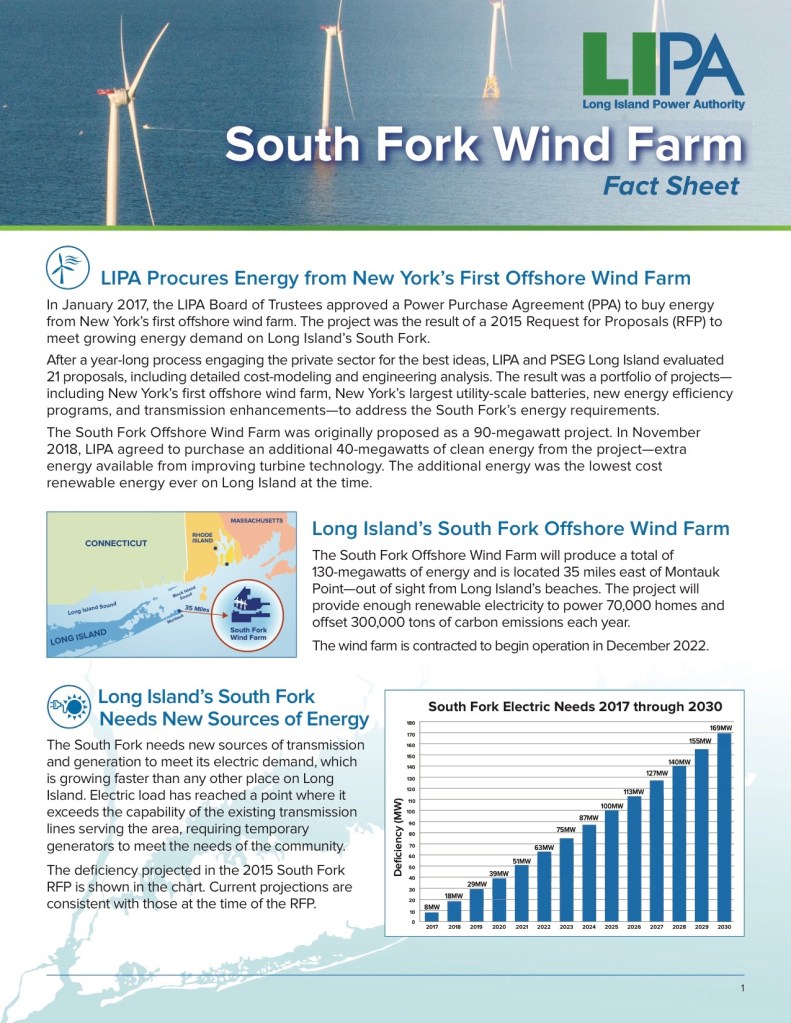
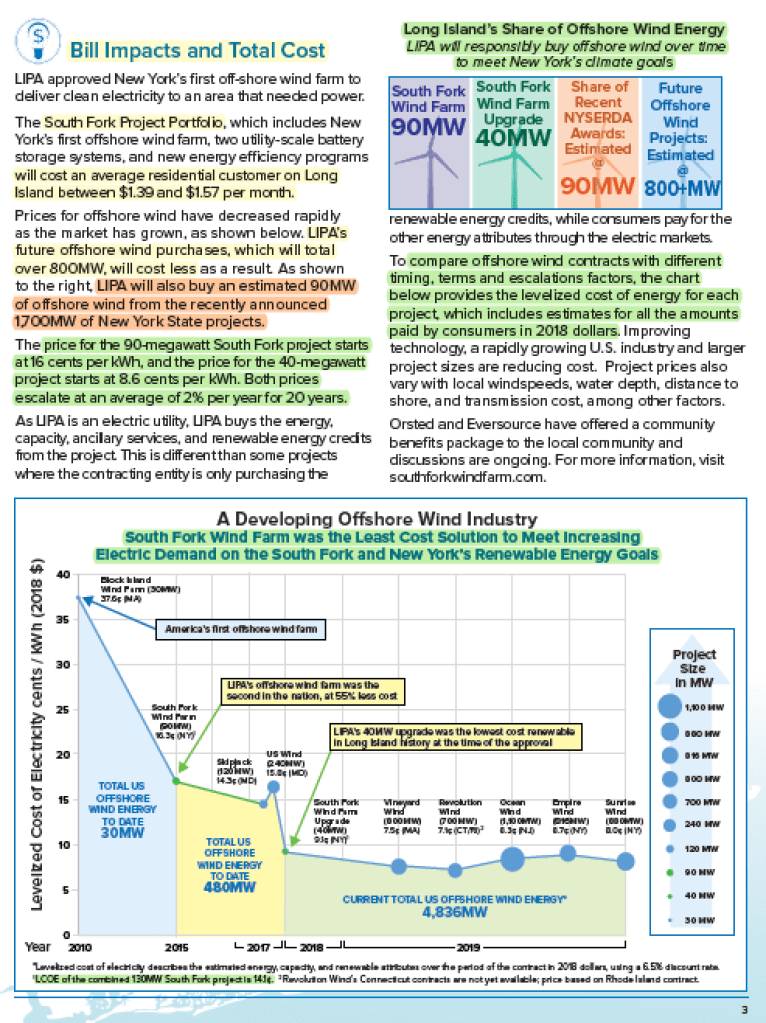
For what it’s worth, here are my main take-aways from the new LIPA Fact Sheet (attached below with highlights added) on the South Fork Wind Farm:
1. South Fork Wind Farm was the least cost solution to meet increasing electric demand on the South Fork and New York’s renewable energy mandates.
2. LIPA’s share of New York State’s 9,000 MW offshore wind target is over 1,000 MW and SF Wind Farm is the first of many projects to meet the Long Island goal.
3. The South Fork RFP Portfolio (Wind+Storage+Demand Response) will cost the average residential customer on LI between $1.39 and $1.57 per month.
4. The price LIPA pays for the 90 MW SFWF starts at 16 c/kWh; the price for the additional 40 MW (contracted in Nov. ’18) starts at 8.6 c/kWh (this additional energy was the lowest cost renewable energy ever on LI at the time). The combined cost for the 130 MW would be about 13.7c/kWh in the first year. Prices escalate at an average 2% per year for 20 years.
5. Levelized Cost of Energy (LCOE) over 20 years for the combined 130 MW SFWF is 14.1¢/kwh (in 2018 dollars, using a 6.5% discount rate). Cost of other planned projects in the region are projected to be significantly lower but an ‘apple-to-apple’ comparison is difficult because these projects are much larger and benefit from economies of scale. They were also selected later and thus benefitted from lower industry price levels.
6. Prices for offshore wind power have declined rapidly in Europe due to increased investment and improving technology and we are now seeing price declines in the emerging U.S. offshore wind industry.
7. LIPA’s future offshore wind purchases will total over 800 MW, and will cost less as a result of expected price decreases. LIPA will also buy an estimated 90 MW of offshore wind from the recently announced 1,700 MW of New York State projects (by NYSERDA).
8. As a result of procuring offshore wind power spread out over many years (a decade or so) as prices decline, LIPA’s overall offshore wind portfolio cost will be minimized.
9. When comparing costs of renewable energy to conventional sources we also need to account for costs which are typically not accounted for such as the cost of air pollution, climate, unknown fuel price risk, etc.
The bottom line, as I see it, is that all this demonstrates that the South Fork Wind Farm not only provides us with local, renewable and reliable power but does so at an affordable price. And over time we will get more and more offshore wind power at even lower prices. This will result in a very affordable average bill impact and could even provide significant savings over fossil fueled power if natural gas prices turn out to be higher than currently forecast.
I’m attaching a marked-up version of the LIPA Fact Sheet where I highlighted sections discussing some of the above points in context.
Kinsella’s
price calculation of 24.6 cents/kWh is hilarious! He can’t be serious about
just adding the two numbers.
To
calculate the combined per kWh cost of the 130 MW project one has to calculate
the weighted cost of each component:
Output from the first 90 MW at an agreed starting price of
16 c/kWh with another 40 MW at 8.6c/kWh results in a price of:
(90 MW x
$0.16 + 40 MW x $0.086)/(90 MW + 40 MW) = $0.137231 or about 13.7 cents per
kWh in the first year.
Simple
arithmetic. And LIPA’s Levelized Cost of Energy (LCOE) calculation over 20
years on page 3 of their fact sheet confirms the combined price in the footnote
as 14.1 cents/kWh:
Authored by Paul Veers1,*, and 28 other scientists. Science 25 Oct 2019: Vol. 366, Issue 6464, eaau2027 DOI: 10.1126/science.aau2027
I have copied the abstract and tried to
sum up the salient points. Basically, the success of Wind (and Solar) energy, and
the predicted growth of the industry, has led to new challenges. Innovations are
needed to handle the predicted future demand for clean energy.
Abstract
Harvested by advanced technical systems
honed over decades of research and development, wind energy has become a
mainstream energy resource. However, continued innovation is needed to realize
the potential of wind to serve the global demand for clean energy. Here, we
outline three interdependent, cross-disciplinary grand challenges
underpinning this research endeavor. The first is the need for a deeper
understanding of the physics of atmospheric flow in the critical zone
of plant operation. The second involves science and engineering of the
largest dynamic, rotating machines in the world. The third encompasses optimization
and control of fleets of wind plants working synergistically within the
electricity grid. Addressing these challenges could enable wind power
to provide as much as half of our global electricity needs and perhaps beyond.
Introduction:
Abundant, affordable energy in many
forms has enabled notable human achievements, including modern food and
transportation infrastructure. Broad-based access to affordable and clean
energy will be critical to future human achievements and an elevated global
standard of living. However, by 2050, the global population will reach an
estimated 9.8 billion, up from ~7.6 billion in 2017 (1). Moreover, Bloomberg New Energy
Finance (BNEF) estimates suggest that annual global electricity demand could
exceed 38,000 terawatt-hours per year by 2050, up from ~25,000 terawatt-hours
in 2017 (2). The demand for low- or no-carbon
technologies for electricity is increasing, as is the need for electrifying
other energy sectors, such as heating and cooling and transport (2–4). As a result of these two partially
coupled megatrends, additional sources of low-cost, clean energy are
experiencing increasing demand around the globe. With a broadly available
resource and zero-cost fuel, as well as exceptionally low life-cycle pollutant
emissions, wind energy has the potential to be a primary contributor to the
growing clean energy needs of the global community.
During the past decade, the cost of
three major electricity sources—wind power, solar power, and natural gas—has
decreased substantially. Wind and solar are attractive because their low
life-cycle emissions offer public health and broader environmental benefits.
Leading energy forecasters such as consultancies, nongovernmental
organizations, and major energy companies—and specifically BNEF, DNV GL, the
International Energy Agency (IEA), and BP—anticipate continued price parity
among all of these sources, which will likely result in combined wind and
solar supplying between one- and two-thirds of the total electricity demand
and wind-only shares accounting for one-quarter to one-third across the globe
by 2050 (3–6). Tapping the potential terawatts of
wind energy that could drive the economic realization of these forecasts and
subsequently moving from hundreds of terawatt-hours per year to petawatt-hours
per year from wind and solar resources could provide an array of further
economic and environmental benefits to both local and global communities.
From a business perspective, at just
over 51 gigawatts of new wind installations in 2018 (7) and more than half a terawatt of
operating capacity, the global investment in wind energy is now ~$100
billion (U.S. dollars) per annum. The energy consultant DNV GL predicts
that wind energy demand and the scale of deployment will grow by a factor
of 10 by 2050, bringing the industry to the trillion-dollar scale (6) and positioning wind as one of the
primary sources of the world’s electricity generation.
However, to remain economically
attractive for investors and consumers, the cost of energy from wind must
continue to decrease (8, 9). Moreover, as deployment of
variable-output wind and solar generation infrastructure increases, new
challenges surface related to the adequacy of generation capacity on a
long-term basis and short-term balancing of the systems—both of which are
critical to maintaining future grid system stability and reliability (10–12).
A future in which wind energy
contributes one-third to more than one-half of consumed electricity, and in
which local levels of wind-derived power may exceed 100% of local demand, will
require a paradigm shift in how we think about, develop, and manage the
electric grid system (10–14). The associated transformation of the
power system in high-renewables scenarios will require simultaneous management
of large quantities of weather-driven, variable-output generation as well as
evolving and dynamic consumption patterns.
A key aspect of this future system is
the availability of large quantities of near-zero marginal cost energy, albeit
with uncertain timing. With abundant near-zero marginal cost energy, more
flexibility in the overall electricity system will allow many different end
users to access these “cheap” energy resources. Potential use cases for this energy
could entail charging a large number of electric vehicles, providing
inexpensive storage at different system sizes (consumer to industrial) and time
scales (days to months), or channeling into chemicals or other manufactured
products (sometimes referred to as “power-to-X” applications).
A second key aspect of this future system is the transition from an electric grid system centered on traditional synchronous generation power plants to one that is converter dominated (15). This latter paradigm reduces the physical inertia in the system currently provided by traditional power plants while increasing reliance on information and digital signals to maintain the robustness and power quality of the modern grid (12).
Here are some interesting figures from the this Review:
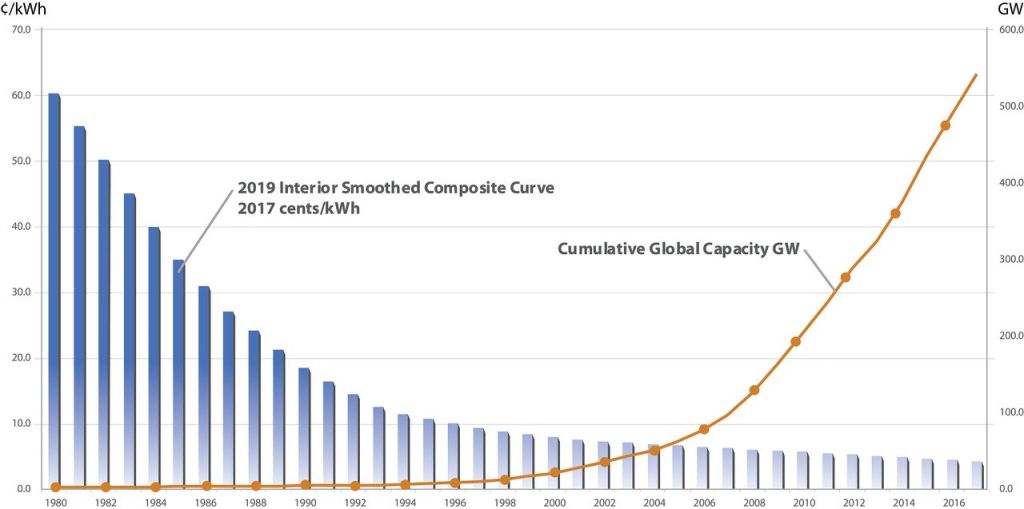
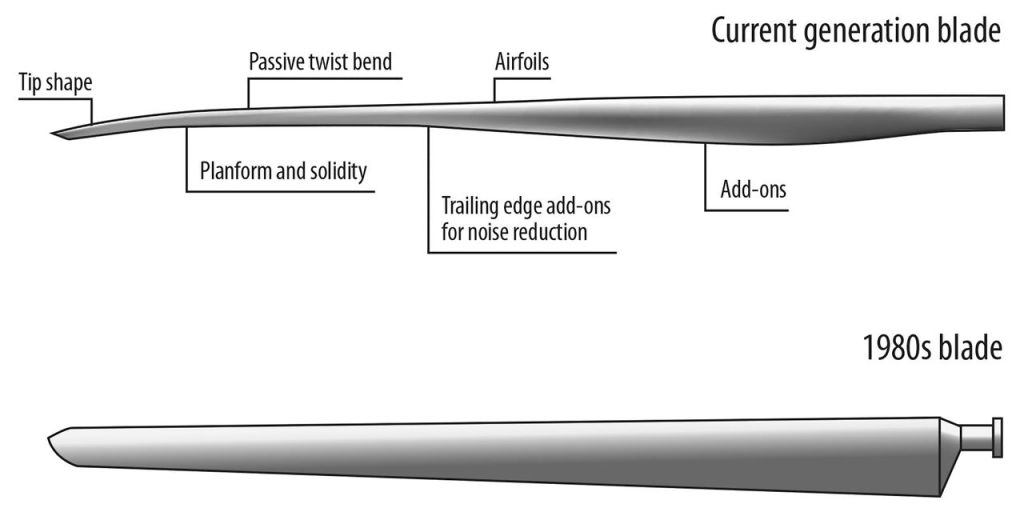
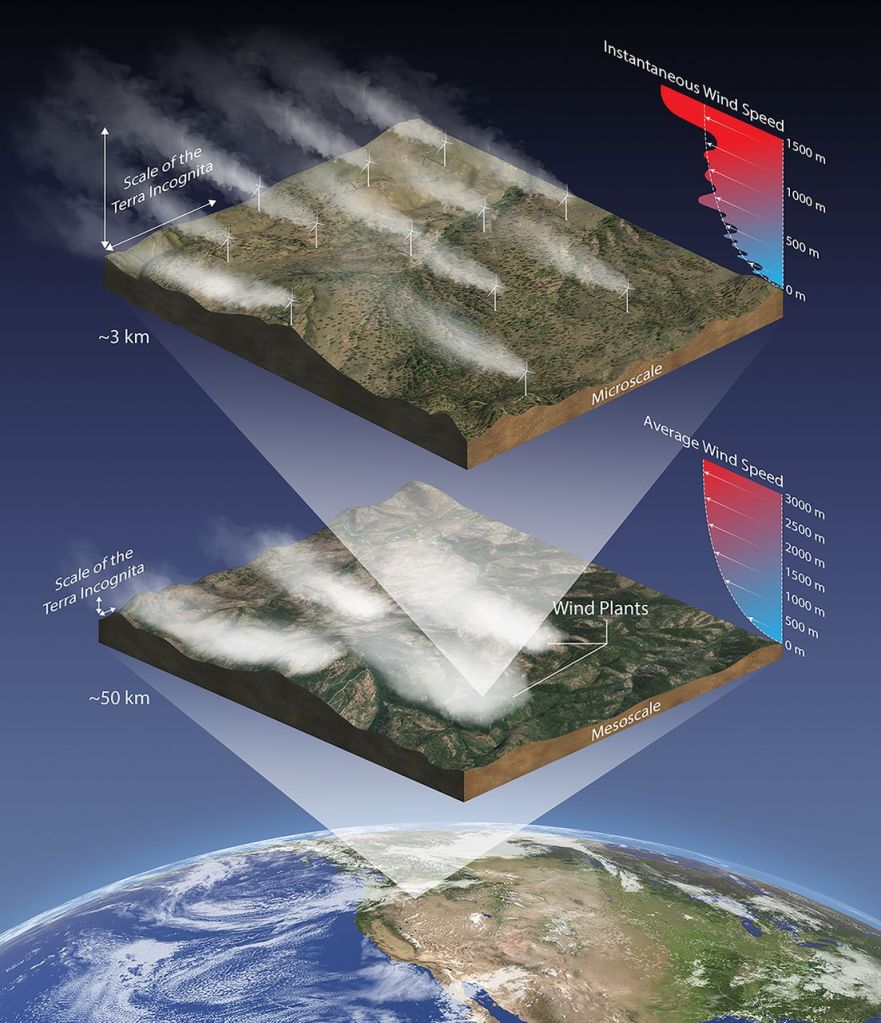
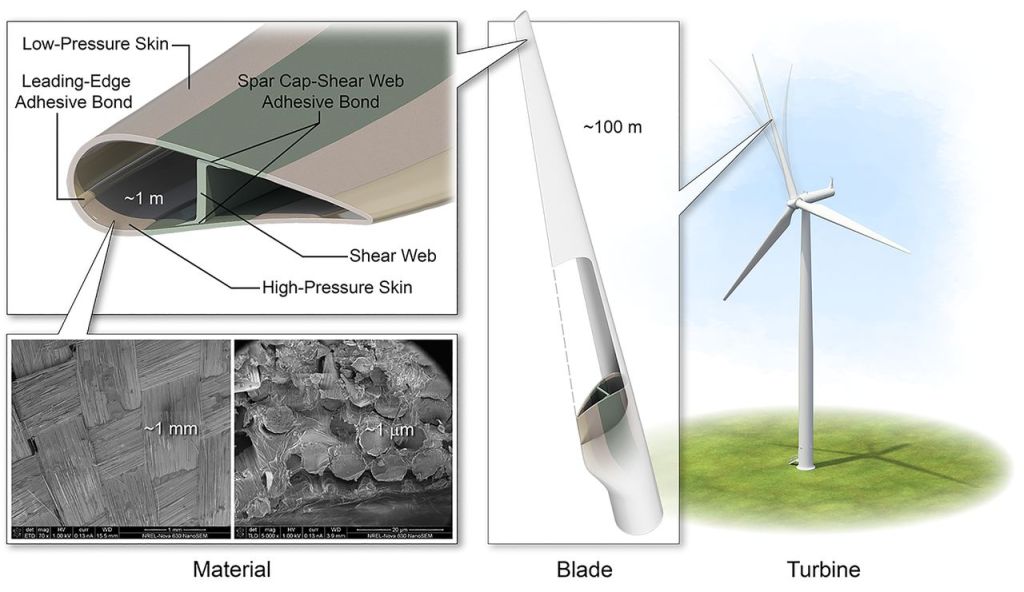
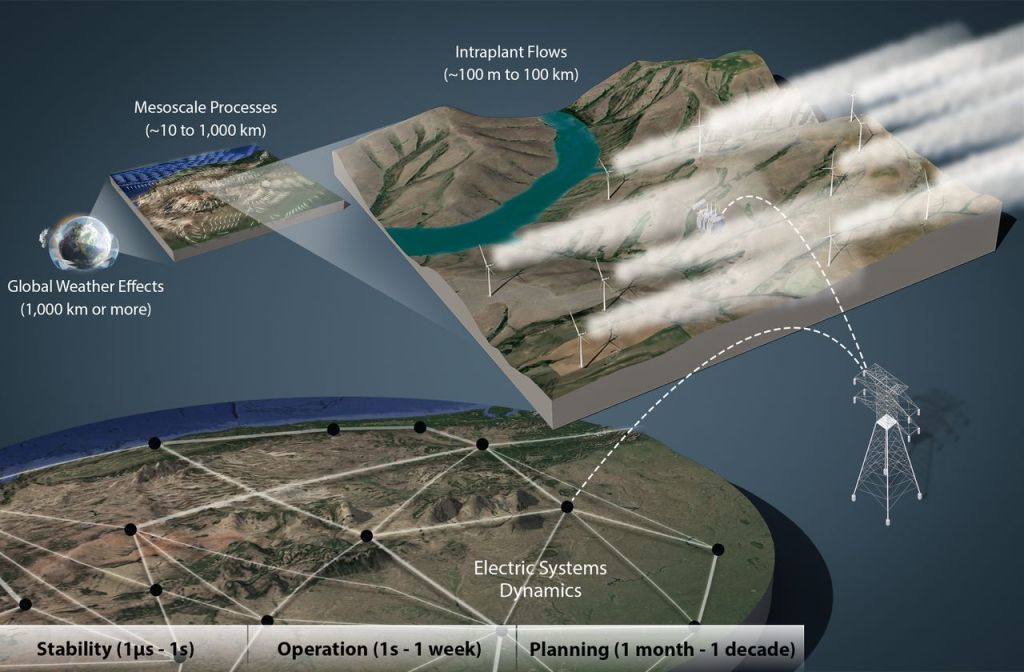
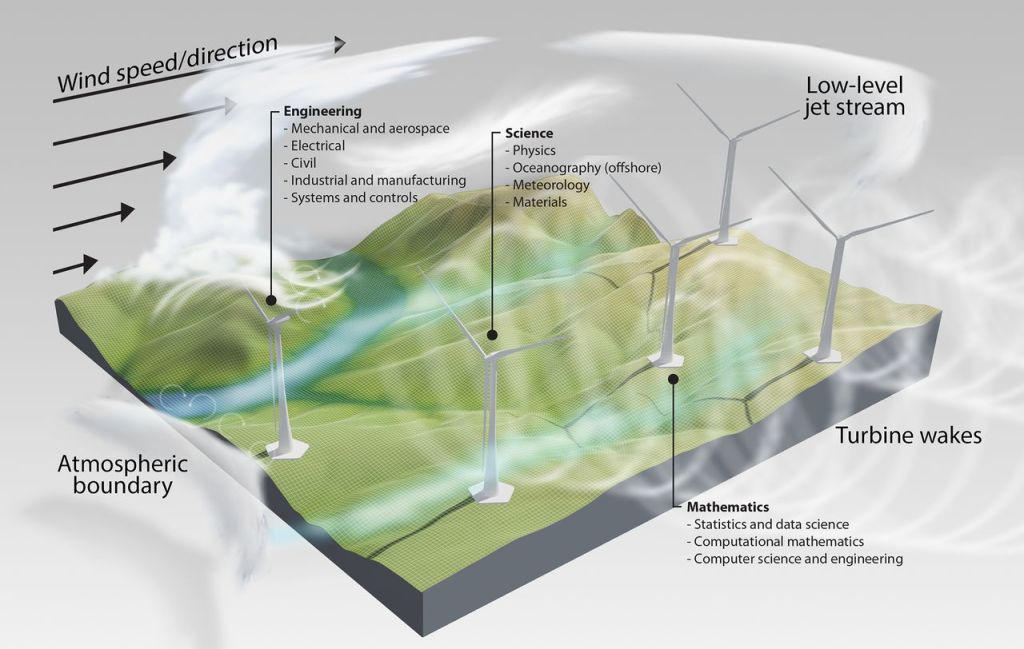
Fig. 1 Global cumulative installed capacity (in gigawatts) for wind energy and estimated levelized cost of energy (LCOE) for the U.S. interior region in cents per kilowatt-hour from 1980 to the present.Historical LCOE data are from (17) and (20) and have been verified for all but 5 years with the U.S. wind industry statistics database detailed in (17). LCOE data have been smoothed with a combination of polynomial best fit and linear interpolations to emphasize the long-term trends in wind energy costs. Historical installed capacity data are from the database detailed in (17), the Global Wind Energy Council, and the American Wind Energy Association.Fig. 2 Wind turbine blade innovation comparing a modern commercial blade (top) and a commercial blade from the mid-1980s (bottom) scaled to the same length.The modern blade is 90% lighter than the scaled 1980s technology. NATIONAL RENEWABLE ENERGY LABORATORY (NREL) BASED ON A CONCEPT BY HENRIK STIESDAL AND KENNETH THOMSEN (SIEMENS GAMESA)Fig. 3 Relevant wind power scales across space—from large-scale atmospheric effects in local weather at the mesoscale to inter- and intraplant flows and topography at the microscale. ILLUSTRATION: BESIKI KAZAISHVILI, NRELFig. 4 Wind turbine blades are complex composite shell structures in which small-scale manufacturing flaws can grow because of the incessant turbulence-driven loading that can cause large-scale problems. PHOTOS: NREL; ILLUSTRATION: BESIKI KAZAISHVILI, NRELFig. 5 Power generated by the weather-driven plant must connect to the electrical grid and support the stability, reliability, and operational needs on time scales ranging from microseconds (for managing disturbances) to decades (for long-term planning). ILLUSTRATION: JOSH BAUER AND BESIKI KAZAISHVILI, NRELFig. 6 A spectrum of science, engineering, and mathematics disciplines that, if integrated, can comprehensively address the grand challenges in wind energy science. ILLUSTRATION: JOSH BAUER, NREL
In the Guardian, Fri 25 Oct 2019 04.23 EDT First published on Thu 24 Oct 2019 14.45 EDT
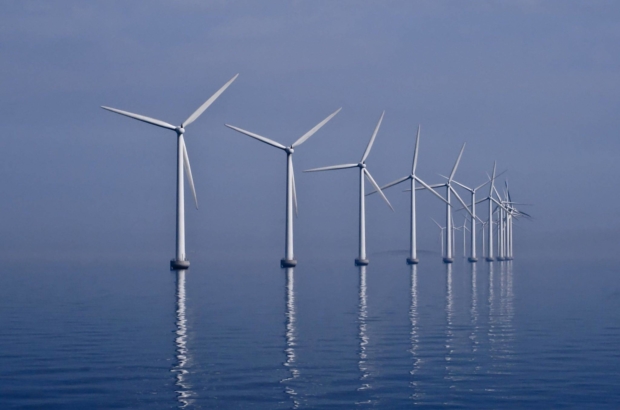
“Offshore wind currently provides just 0.3% of global power
generation, but its potential is vast,” the IEA’s executive director,
Fatih Birol, said.
The study predicts offshore wind generation will grow 15-fold to
emerge as a $1tn (£780bn) industry in the next 20 years and will prove
to be the next great energy revolution.
The IEA said earlier this week that global supplies of renewable electricity were growing faster than expected
and could expand by 50% in the next five years, driven by a resurgence
in solar energy. Offshore wind power would drive the world’s growth in
clean power due to plummeting costs and new technological breakthroughs,
including turbines close to the height of the Eiffel Tower and floating
installations that can harness wind speeds further from the coast.
The next generation of floating turbines capable of operating further
from the shore could generate enough energy to meet the world’s total
electricity demand 11 times over in 2040, according to IEA estimates.
The report predicts that the EU’s offshore wind capacity
will grow from almost 20 gigawatts today to nearly 130 gigawatts by
2040, and could reach 180 gigawatts with stronger climate commitments.
In China, the growth of offshore wind generation is likely to be even
more rapid, the IEA said. Its offshore wind capacity is forecast to
grow from 4 gigawatts to 110 gigawatts by 2040 or 170 gigawatts if it
adopts tougher climate targets.
Birol said offshore wind would not only contribute to generating clean electricity,
but could also offer a major opportunity in the production of hydrogen,
which can be used instead of fossil fuel gas for heating and in heavy
industry.
The process of making hydrogen from water uses huge amounts of
electricity but abundant, cheap offshore wind power could help produce a
low-cost, zero-carbon alternative to gas.
In the North Sea, energy companies are already planning to use the
electricity generated by giant offshore windfarms to turn seawater into
hydrogen on a floating “green hydrogen” project, backed by the UK
government. The clean-burning gas could be pumped back to shore to heat
millions of homes by the 2030s. The UK has committed to reaching net zero carbon emissions by 2050.
The overlap between the UK’s declining oil and gas industry and the
burgeoning offshore wind sector could offer major economic benefits for
the UK, Birol said.
“Offshore wind provides a huge new business portfolio for major
engineering firms and established oil and gas companies which have a
strong offshore production experience,” he said. “Our analysis shows
that 40% of the work in offshore wind construction and maintenance has
synergies with oil and gas practises.”
We have some news… about how we will respond to the escalating climate crisis – we will not stay quiet. This is the Guardian’s pledge: we will continue to give global heating, wildlife extinction and pollution the urgent attention and prominence they demand. The Guardian recognises the climate emergency as the defining issue of our times.
Our
independence means we are free to investigate and challenge inaction by
those in power. We will inform our readers about threats to the
environment based on scientific facts, not driven by commercial or
political interests. And we have made several important changes to our
style guide to ensure the language we use accurately reflects the
environmental catastrophe.
The Guardian believes that the
problems we face on the climate crisis are systemic and that fundamental
societal change is needed. We will keep reporting on the efforts of
individuals and communities around the world who are fearlessly taking a
stand for future generations and the preservation of human life on
earth. We want their stories to inspire hope. We will also report back
on our own progress as an organisation, as we take important steps to
address our impact on the environment.
The Guardian made a
choice: to keep our journalism open to all. We do not have a paywall
because we believe everyone deserves access to factual information,
regardless of where they live or what they can afford.
We
hope you will consider supporting the Guardian’s open, independent
reporting today. Every contribution from our readers, however big or
small, is so valuable














 WIN WITH WIND